Follow the Credit: The State-by-State Patchwork Reshaping American VFX in 2026
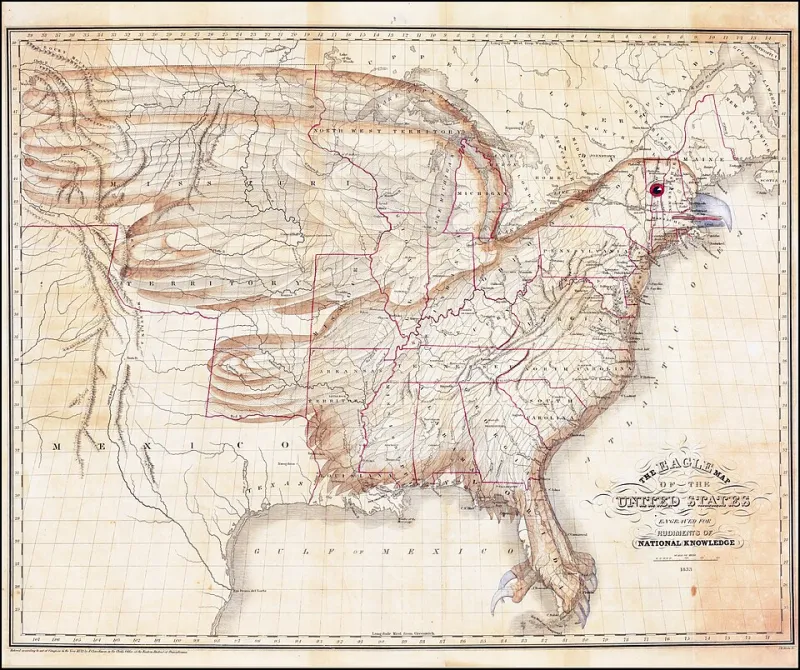
Photo: Isaac W. Moore (engraving) / Published by E. L. Carey & A. Hart, Philadelphia, Public domain, via Wikimedia Commons
The visual effects map of the United States is no longer drawn by where the studios are. It is drawn by where the statutes are. In 2026, a vendor's address, an artist's relocation, and a studio's bid can turn on a state cap, a sunset clause, or a residency requirement. The incentive maze is not a footnote to production finance. It is a production tool.
What Actually Counts as a Visual Effects Job
Most state production incentives were written for film and television labor: cast, crew, stages, locations. Visual effects is postproduction, digital animation, and software-driven work, and states treat it unevenly. Some programs include postproduction and digital media; others exclude it or cap it. Some require resident hires. Some offer refundable credits; others offer rebates that arrive later and at a discount. The same compositor can be incentivized in one state and invisible in another.
That inconsistency explains why production finance teams now read incentive statutes the way they read vendor bids. Qualified spend, above-the-line exclusions, audit requirements, and minimum thresholds all change the real cost of a shot. A credit is not cash until it is monetized, and a rebate is not a discount until it clears.
The Big Incumbents and the Challengers
The established centers remain formidable. California continues to refine its production credit while competing with lower-cost states. Georgia offers volume, infrastructure, and a deep crew base. Louisiana has a long-running program and a established post community. New Mexico combines stages, workforce training, and a growing vendor ecosystem. New York remains a postproduction and advertising hub, with incentive programs that matter to episodic and commercial work.
Around them, challengers are revising their offers. New Jersey has rebuilt its production incentive profile. Illinois, Kentucky, Oklahoma, Texas, Nevada, Utah, Virginia, and Massachusetts all maintain programs or workforce initiatives that can influence where visual effects dollars land. In 2026, several states have adjusted caps, added performance metrics, or extended sunset dates. The details change quarterly. The direction is consistent: more competition, more conditions, more auditing.
The Unlikely Hubs
Secondary cities are becoming visual effects hubs not because they are cheaper in the abstract, but because they combine incentives with sustained work. Atlanta, Albuquerque, New Orleans, Oklahoma City, Tulsa, Newark, Buffalo, Pittsburgh, and Savannah all appear on vendor expansion lists for different reasons. A satellite office in Albuquerque or Newark is not a lifestyle decision. It is a bid strategy.
Artists cluster around work, but work clusters around policy. When a state funds workforce training, builds stage capacity, or guarantees a credit for postproduction, it lowers the risk for vendors to hire locally. That matters more than a headline tax rate. A program that trains compositors but offers no postproduction credit will lose those compositors to a state that does both.
The Risk of Chasing Credits
Incentive-driven ecosystems can be brittle. When a cap is reached or a program sunsets, work can evaporate faster than it arrived. Vendors must decide whether to build permanent infrastructure or mobile teams that follow the credit. Artists must decide whether to relocate for a program that may not survive the next legislative session.
The smart money reads statute, not press release. It looks at funding certainty, audit history, residency rules, and the depth of the local labor pool. A generous credit with no crew is a promise without a pipeline.
The 2026 Outlook
Policy decisions in state capitals will continue to reshape where studios build vendor relationships and where artists build careers. The states that win will not simply offer the largest percentage. They will offer predictability, workforce depth, and a postproduction ecosystem that can survive a change in government. The visual effects map is being redrawn, one credit at a time. The industry would do well to follow the fine print.