Show Your Work: The Breakdown Economy Rewriting VFX Hiring
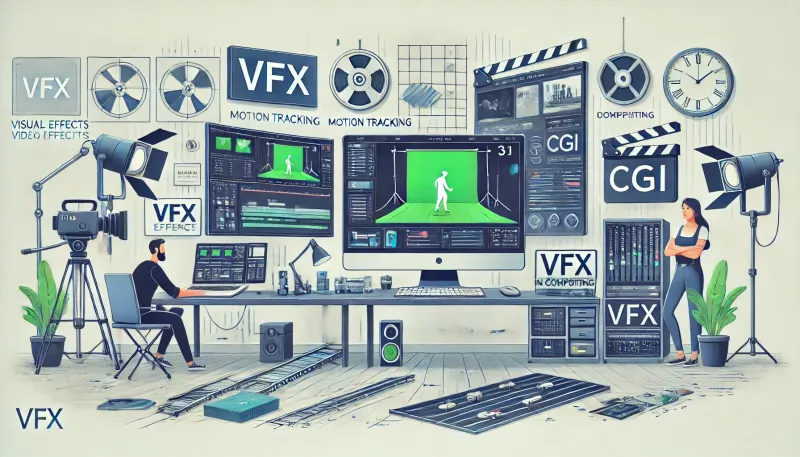
Photo: VFX artist reviewing shot breakdown on computer monitors in studio, via findandcreate.com
The demo reel is dead. Long live the breakdown.
That is not a sentimental claim about the loss of a beloved format. It is an observation about how hiring actually works in 2026. The three-minute montage—set to a driving track, cut fast enough to disguise weak shots, and polished enough to imply competence—has lost much of its signal. Hiring managers have seen too many reels that look impressive and explain nothing. They have learned to ask a different question: can this artist show how the work was made?
The Three-Minute Montage Lost Its Signal
The old reel had a simple logic. If the shots looked good, the artist was good. But visual effects is a collaborative craft, and a reel rarely reveals who did what. A junior artist can inherit a beautifully lit asset. A senior artist can spend three weeks on a shot that appears for six frames. A montage can hide both contributions and deficits.
Recruiters know this. So do supervisors. The result is a shift toward evidence over atmosphere. A polished reel may still open a door, but a clear breakdown often decides whether the conversation continues.
What Recruiters Actually Do
In practice, the new hiring process is less glamorous than a reel screening. It looks more like an investigation.
-
They scrub the breakdown. Hiring managers want to see a shot move from plate to final, with enough intermediate stages to understand the artist's contribution. A forty-second breakdown with clear labels often outperforms a three-minute reel with none.
-
They check credits. IMDb and professional profiles are cross-referenced against the work. If a breakdown claims a hero shot, the credits and references should support it.
-
They ask for the problem, not just the result. The strongest candidates can explain what went wrong, what constraint shaped the approach, and what they would do differently.
-
They lurk in Discord servers. Community spaces have become informal references. How an artist talks about other people's work, answers technical questions, and handles critique can matter as much as a demo link.
-
They screen for collaboration. A brilliant shot with no evidence of teamwork is less attractive than a solid shot with clear notes about handoffs, reviews, and iteration.
The Anatomy of a Useful Breakdown
A useful breakdown is not a highlight reel with labels. It is a short, legible argument about craft. The best examples tend to include a handful of common elements: the shot in context, the artist's specific role, a before-and-after comparison, the technical or creative problem, the choices made, and the constraints that shaped those choices.
A sixty- to ninety-second breakdown can be enough. A single annotated shot can be enough. The point is not volume. The point is clarity. Hiring managers are not looking for a director's cut. They are looking for a worker who can communicate.
What Juniors Should Post Instead of a Spinning Logo
For junior artists, the temptation is to imitate the old reel: a spinning logo, a particle burst, a few environment pans, and a music cue. That approach is now close to wasted effort. A better portfolio might include:
- One shot teardown, with plates, layers, and a brief explanation of the artist's contribution.
- A lighting study that shows the same asset under different conditions.
- A compositing breakdown that reveals the seam work, not just the final frame.
- A small tool, script, or workflow note that solved a practical problem.
- A problem log from a collaborative project, including what changed after review.
- A credit list that is specific, honest, and easy to verify.
The spinning logo can stay, if it must. But it should not be the first thing a recruiter sees.
The Risks of the Breakdown Economy
This shift is not without costs. Breakdowns reward articulate artists, which can disadvantage strong technicians who are less comfortable explaining their work. They also raise intellectual-property questions, especially when artists post material from productions that have not been released. And they can encourage a kind of unpaid documentation labor, where artists are expected to produce educational content simply to be considered.
Studios should be careful not to turn the breakdown into a new gatekeeping ritual. The goal is not to demand a director's commentary for every shot. The goal is to replace a vague montage with a clearer signal of skill, judgment, and collaboration.
The Portfolio Becomes Evidence
For better and for worse, the VFX portfolio is no longer a performance. It is a record. The artists who thrive in this environment are the ones who can show their work—not just the final frame, but the thinking, the handoffs, and the problem-solving that made it possible.
That is a more demanding standard than a three-minute reel. It is also a more honest one.