The Most Expensive Sentence on Set: A Case Against 'Fix It in Post'
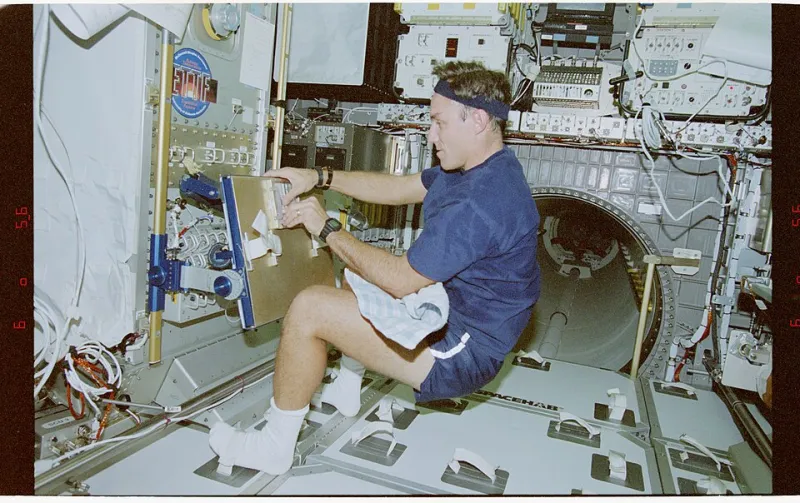
Photo: National Aeronautics and Space Administration. Lyndon B. Johnson Space Center. 2/17/1973, Public domain, via Wikimedia Commons
It is said warmly, usually by someone trying to keep a shooting day moving. The sun is going, the crew is tired, the shot is ninety percent there. And so the sentence arrives: fix it in post.
Everyone relaxes. The day is saved. The cost of that relief will not appear on any call sheet, and by the time it does appear on the budget, it will have traveled through three departments and acquired interest.
This is an argument for retiring the phrase.
A Safety Net That Never Held
Post-production has never been a safety net, only a place where consequences are invoiced. That distinction was easier to ignore when digital cleanup was inexpensive relative to photography and when delivery formats were fewer. Neither condition holds in 2026. A single compromised setup now propagates across a theatrical master, an HDR grade, a streaming deliverable, broadcast versions, international variants, and the social cutdowns that marketing will request whether or not anyone planned for them.
What was once one shot is now a family of shots sharing the same flaw.
The Cascade, Explained
Consider an ordinary example. A reflective surface in frame is left unmanaged because a flag would cost twenty minutes. In post, that reflection must be painted out across every frame in which it appears, and the artist must reconstruct what should have been visible behind it — a task that requires a clean plate that was never photographed.
The arithmetic that follows is illustrative rather than unusual: a modest on-set adjustment costs a fraction of what the same problem costs once it enters a facility, where it must be tracked, roto'd, reconstructed, reviewed, revised, and re-rendered in every deliverable. Multiply by the number of setups in a sequence. Multiply again by the number of notes the sequence receives.
None of this is an argument against visual effects. It is an argument against a category error — treating a discipline built on construction as though it were one built on repair.
The Supervisor's No
Here is the underrated proposition: the most valuable person on set may be the supervisor willing to say no.
Not reflexively, and not to protect a department's scope. A good supervisor says no with a reason and a price. The camera position will create a tracking problem across the whole sequence. That costume will need to be simulated for the entire third act. That lighting change will not match the reverse, and the reverse is scheduled for Thursday. Each refusal comes with an alternative that is cheaper than the consequence.
Producers who treat that voice as an obstacle tend to discover its value later, in a review session, when the alternative has become a change order.
Cheap Now, Dear Later
Budgets are not dishonest; they are simply organized by time. Money saved in prep is visible immediately and celebrated. Money spent in post arrives months later, attached to a different line, defended by a different department, and attributed to the vendor rather than to the decision.
That asymmetry rewards deferral. It is also the reason so many productions report that post costs exceeded projections while nobody can identify the moment the overage began.
What Good Faith Actually Costs
The fix is not more paperwork. It is a cultural shift in three parts.
First, treat the supervisor as a planning participant rather than a firefighter summoned after the fact. The earlier the department sees a script and a schedule, the cheaper its answers become.
Second, price the decision in the room. When a compromise is proposed, ask what it will cost to repair rather than what it saves to accept. That question is not obstructive; it is accounting.
Third, stop using the phrase as a form of politeness. "We'll address it later" is honest. "Fix it in post" implies a solution exists and has been paid for, and neither is guaranteed.
The Cost of a Deferred Decision
The industry's most expensive habit is not any single technology or vendor rate. It is the belief that a decision can be postponed without a price. Every craft on a film set depends on decisions being made while the people who understand them are still in the room — and the visual effects department, whatever its reputation, is usually the one department asked to solve problems created by everyone else.
Retire the sentence. Keep the supervisor. The budget will follow.