Rewinding the Brand: The Quiet Industry Rebuilding America's Classic Commercials Frame by Frame
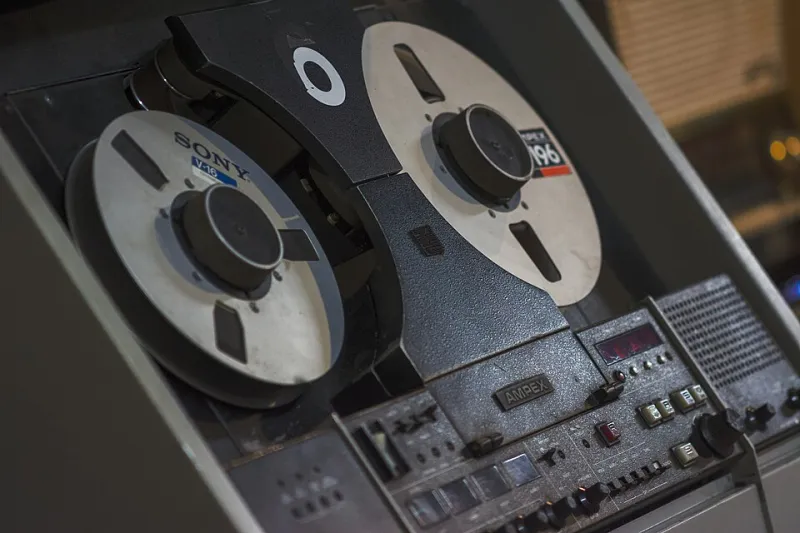
Photo: Ethan Long, CC BY-SA 2.0, via Wikimedia Commons
Somewhere in a climate-controlled vault outside Los Angeles sits a two-inch master tape of a hamburger commercial that last aired in 1987. Within the month, that spot will run again — on a connected television in suburban Ohio, sandwiched between streaming content delivered at 4K HDR. Between here and there stands a small army of restoration artists, colorists, and archivists whose work almost nobody notices and almost everybody remembers.
This is the retrocommercial restoration business, and it is growing faster than most people in the industry expected.
Why Old Ads Are Suddenly Worth Money
The economics are counterintuitive. A thirty-year-old commercial has no theatrical re-release, no awards campaign, no box office. What it has is equity — decades of accumulated brand recognition that marketing departments have realized is sitting idle. When a soft drink company wants to lean into nostalgia for a summer campaign, it has two options: shoot something new that imitates the past, or restore the original and let genuine memory do the work.
Restoration is frequently cheaper, and it is always more authentic. Agencies have discovered that audiences can smell a re-creation the way they can smell a reprint of a vintage poster. The original grain, the slightly mushy standard-definition composition, the specific warmth of a 1980s film stock — these are not defects. They are provenance.
Studios that once survived on feature film cleanup have begun building dedicated restoration divisions, some staffed by a dozen artists working exclusively on archival advertising. The contracts are smaller than blockbuster work but steadier, and the pipeline has proven remarkably durable as brands cycle through anniversary campaigns and streaming platforms hungry for recognizable content.
Matching an Imperfection You Have to Recreate
The craft involved is stranger than it sounds. A restoration artist working on a 1992 spot is not removing damage — they are deciding which damage to keep. Tape warble, the subtle horizontal instability of a VHS-generation master, carries emotional information. Strip it out entirely and the commercial feels sterile, like a photograph of a photograph. Leave too much and the spot looks broken on a modern panel.
Artists describe the work as a kind of forensic impersonation. They study how chroma bled on particular tape stocks, how film grain behaved at specific exposure latitudes, how broadcast-safe color limits crushed saturation in ways viewers of the era simply accepted as normal. Then they must reproduce those behaviors deliberately, by hand, on a digitally clean image. One compositor compared it to forging your own signature: the flaw has to be authentic, and authenticity requires repetition.
The hardest cases are spots that survive only as consumer recordings — a commercial preserved because someone taped it off a broadcast in 1989. Here the restoration team is essentially rebuilding a national memory from a secondhand artifact, stabilizing, denoising, and reconstructing frames that never existed in any master.
The Ethics of a Perfect Past
Which brings us to the uncomfortable part. Every restoration involves choices, and some of those choices are editorial. Do you update a commercial whose humor has aged poorly? Do you remove a logo that has since been redesigned? Do you sharpen imagery that audiences remember as soft, thereby altering the memory itself?
Archivists argue that a restored commercial should be documented like any historical object — with the original preserved and the intervention disclosed. Marketing timelines, predictably, exert different pressures. The spot has to sell something next quarter, not sit in a vault awaiting scholarly review.
There is no industry standard yet, no equivalent of the film restoration codes that govern theatrical archives. What exists is a loose professional consensus that the goal is not to make old commercials look new, but to make them look the way people remember them — which, memory researchers will tell you, is not the same thing at all.
That gap between the artifact and the remembered artifact may be the most interesting creative territory in the field. The best restoration artists working today are not technicians. They are, in effect, translators between two versions of the American past: the one that existed on tape, and the one that exists in the minds of everyone who watched it.