Flesh and Algorithm: The Rise of AI-Driven Digital Humans and What They Mean for the Art of Acting
There is a particular kind of unease that settles over an audience when they cannot determine whether the face on screen belongs to a living person or a machine. It is not quite fear, and it is not quite wonder — it occupies a space somewhere between the two. That space is precisely where the modern digital double now lives, and American studios are investing heavily in the real estate.
Artificial intelligence has accelerated the creation of photorealistic digital humans to a degree that would have seemed implausible even a decade ago. What once required armies of compositors working across months of post-production can now be initiated through machine-learning pipelines that process facial geometry, skin texture, micro-expression data, and lighting response simultaneously. The result is a class of synthetic performer that is, in the most technical sense of the word, indistinguishable from the original.
Building a Believable Face: The Technical Pipeline
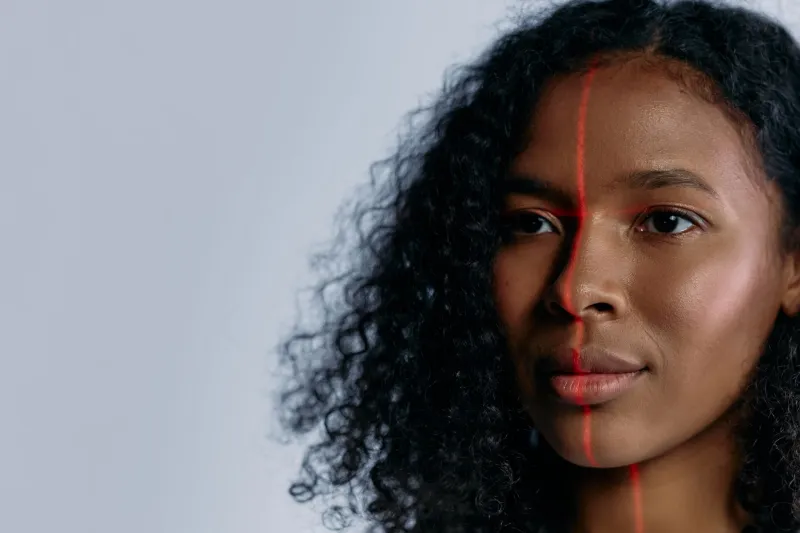
The construction of a convincing digital double begins long before any rendering engine is engaged. A comprehensive photogrammetry session captures an actor's face from dozens — sometimes hundreds — of angles under precisely calibrated lighting conditions. High-resolution texture maps are extracted from this data, encoding not just color but the subsurface scattering properties that give human skin its characteristic translucency. Pores, asymmetries, the faint capillary network beneath the cheek — all of it becomes raw material.
From there, machine-learning models trained on thousands of hours of the actor's existing footage learn to predict how that face moves. Neural networks identify the subtle relationship between a raised brow and the compression of the forehead, between a tightened jaw and the redistribution of soft tissue around the chin. The goal is not to animate a face but to simulate the biomechanical logic that governs it.
When AI enters the retopology and rigging phase, it compresses what was formerly a painstaking manual process into something approaching automation. Proprietary systems developed by visual effects studios — and increasingly by technology companies that license solutions directly to productions — can generate a production-ready facial rig in a fraction of the time that traditional workflows demanded. Performance capture data, gathered from a body double or from archived reference, is then applied to this rig, and the synthetic face learns to inhabit someone else's movement.
The final step — and the one that remains most technically demanding — is integration. Compositing a digital human into a live-action environment requires that every variable of the physical shoot be accounted for: lens characteristics, focal length, grain structure, atmospheric haze. AI-assisted match-moving and relighting tools have dramatically reduced the margin for error here, but the human eye remains the final arbiter. Audiences may not be able to articulate precisely what feels wrong about a digital face, but they will feel it.
De-Aging, Resurrection, and the Expanding Scope of the Technology
The applications that have drawn the most public attention fall into two broad categories: de-aging and posthumous performance reconstruction.
De-aging — the process of rolling back an actor's apparent age through digital manipulation — has become a relatively common feature of prestige studio productions. Marvel's visual effects teams have applied it across multiple franchise entries. The Irishman devoted substantial resources to presenting Robert De Niro, Al Pacino, and Joe Pesci as younger men across a multi-decade narrative. The results were met with critical admiration and genuine debate about whether the uncanny valley had been fully crossed.
Posthumous reconstruction is a more fraught proposition. The use of archival footage, AI-trained likeness models, and voice synthesis to generate new performances from deceased performers raises questions that de-aging, for all its complexity, does not. When a studio reconstructs a performance from a person who cannot consent to that reconstruction, the ethical calculus shifts considerably. American audiences encountered this directly with the digital recreation of Peter Cushing in Rogue One: A Star Wars Story — a moment that generated as much discomfort as it did technical admiration.
The Rights Question: Performers, Unions, and the Likeness Economy
The legal and ethical dimensions of this technology have become among the most actively contested issues in American entertainment. The 2023 SAG-AFTRA strike placed digital likeness rights at the center of its negotiations with major studios and streaming platforms, signaling that the performer community had recognized the existential stakes involved. The concern was not abstract: if a studio can scan an actor once and deploy that likeness indefinitely — across sequels, promotional materials, or entirely new productions — the economic relationship between performer and production company is fundamentally altered.
The agreements reached following that strike established some protections, including requirements for informed consent and compensation for digital likeness use. However, many observers within the industry regard these provisions as a starting point rather than a resolution. The technology continues to advance faster than the legal frameworks designed to govern it, and smaller productions operating outside major studio agreements remain largely unbound by the negotiated terms.
There is also the matter of voice. AI voice synthesis has reached a level of fidelity that makes it possible to generate dialogue in an actor's voice without the actor's participation. Combined with a visual digital double, this creates the theoretical capacity for a fully synthetic performance — one that carries a real person's identity but none of their creative input.
The Craft Argument: What Is Lost, What Is Gained
It would be reductive to frame this technology purely as a threat. The visual effects artists, technical directors, and machine-learning engineers who build these systems are engaged in work of genuine creative complexity. The craft required to construct a digital human that moves audiences — that makes them forget, even momentarily, that they are watching a simulation — is formidable.
There is also a legitimate argument that the technology expands storytelling possibility in ways that serve both audiences and narratives. The ability to present an actor across a wider range of ages within a single film, or to honor a performer's legacy by completing a role they were unable to finish, has produced moments of genuine cinematic value. These are not trivial achievements.
But the craft argument only holds if the human at the center of the process — the performer whose likeness, movement, and identity are being synthesized — retains meaningful agency over how that synthesis occurs and how it is used. Without that condition, the technology risks becoming something more troubling than a production tool: a mechanism for separating performance from performer entirely.
Navigating the Frontier
American productions are navigating this terrain with varying degrees of transparency and care. Some studios have invested in robust consent frameworks and collaborative processes that involve actors directly in the construction of their digital counterparts. Others have moved more quickly, prioritizing capability over conversation.
The most honest assessment of where the industry stands is this: the technology has arrived ahead of the wisdom required to deploy it responsibly. That gap will not close on its own. It will require sustained engagement from performers, directors, visual effects professionals, legal scholars, and the audiences who ultimately decide what kind of cinema they want to support.
At Illusions of Works, we believe that the most durable creative achievements emerge from the intersection of technical ambition and human accountability. The digital double, at its best, is an extraordinary instrument of storytelling. The question the industry must answer — urgently, and in good faith — is who gets to play it.