The Art of the Wrong Turn: How Discarded Ideas Became the Cornerstones of Modern Visual Storytelling
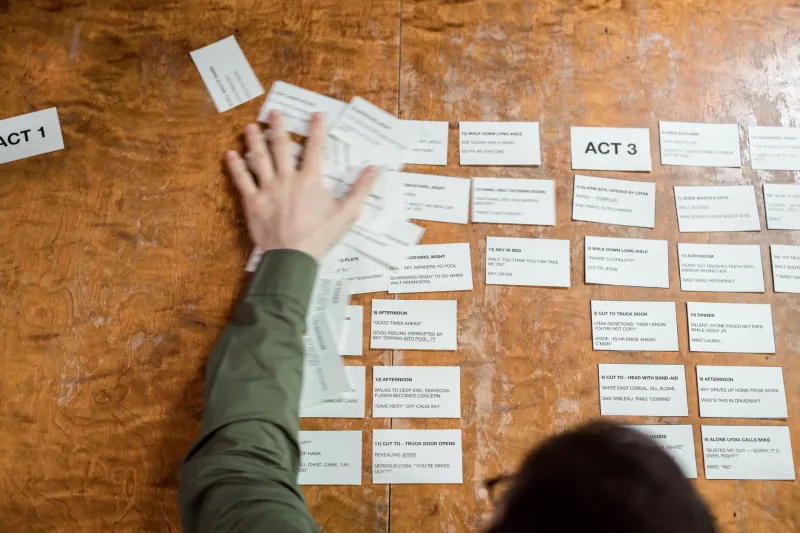
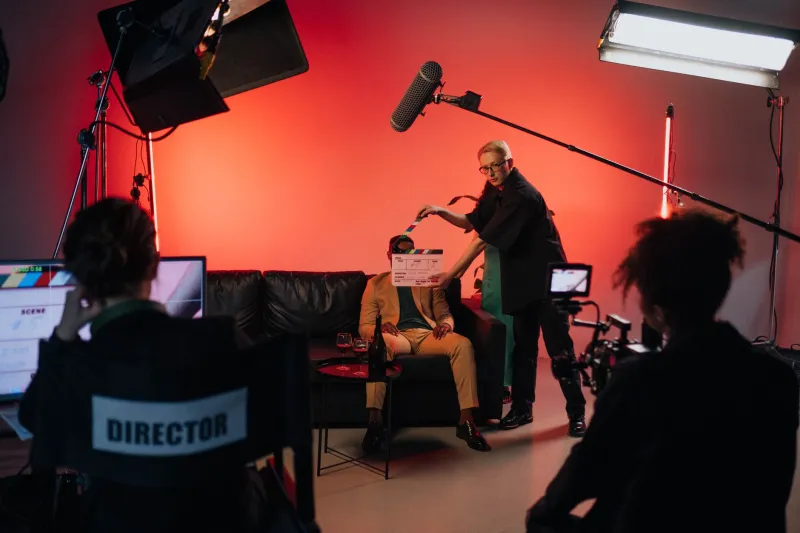
Creativity, in the popular imagination, tends to be narrated as a sequence of confident forward motion. The visionary director conceives the shot. The VFX team executes it. The audience receives it as intended. The behind-the-scenes documentary confirms that everyone knew, more or less, what they were doing.
The reality is considerably messier—and considerably more interesting.
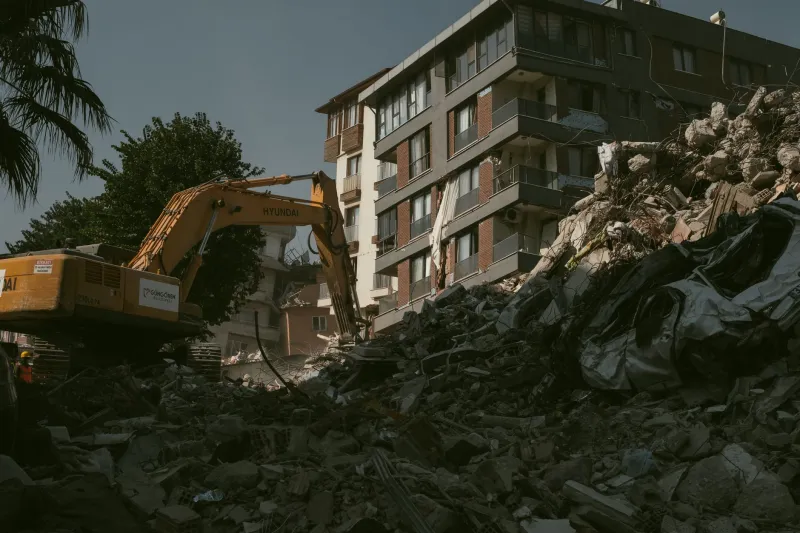
Some of the most consequential visual grammar in contemporary cinema was not designed. It was discovered in the rubble of something that didn't work. The failed render, the rejected storyboard sequence, the practical effect that malfunctioned in a way nobody anticipated—these are not footnotes to the story of visual innovation. In many cases, they are the story.
The Malfunction That Made a Monster
Consider what happened during the production of Jaws in 1975. The mechanical shark—nicknamed Bruce by the crew—failed repeatedly on location, refusing to perform reliably in the saltwater environment of Martha's Vineyard. Steven Spielberg faced a choice: delay production indefinitely or find another way to suggest the threat without showing it directly.
The solution he arrived at, born entirely from necessity, was to keep the shark off-screen for the majority of the film's first two acts. The camera would track through the water from the shark's point of view. The audience would see the reaction to the creature rather than the creature itself. The dread would live in the imagination rather than on the screen.
The result was not a compromise. It was a masterclass in suspense that influenced decades of genre filmmaking. The malfunctioning prop generated a visual grammar—the unseen threat, the subjective predator's-eye perspective—that became a foundational tool of the thriller form. What the production lost in mechanical reliability, it gained in something far more durable: a technique that actually worked.
The Sequence That Couldn't Be Cut
The production of 2001: A Space Odyssey generated an enormous volume of material that Stanley Kubrick ultimately discarded. Among the most significant casualties was an elaborate prologue featuring interviews with scientists and academics contextualizing the film's themes. Kubrick shot it, reviewed it, and concluded it was wrong—not because the footage was technically deficient but because it explained too much.
Stripping the prologue created a film that opened in silence and demanded that the audience do interpretive work the original cut had done for them. The opacity that resulted was not a stylistic preference Kubrick had arrived at by design. It was the consequence of removing something that failed on its own terms.
The visual grammar that emerged from that subtraction—the elliptical cut, the refusal to explain, the confidence that images could carry philosophical weight without verbal scaffolding—defined an entire tradition of ambitious science fiction filmmaking. The wrong idea, excised, revealed the right one.
The Deleted Shot That Became a Signature
In the production of Apocalypse Now, Francis Ford Coppola and his collaborators accumulated so much footage—and so many sequences that were tried, revised, and abandoned—that the editing process became its own extended act of creation. The famous opening sequence, with its layered helicopter imagery and Morrison on the soundtrack, emerged from a period of intense experimentation with material that had no predetermined home in the film's structure.
Several sequences shot during principal photography were discarded not because they failed individually but because they disrupted the rhythm of a film that was, above everything else, a study in psychological dissolution. The visual grammar of fragmentation, repetition, and temporal dislocation that defines the film's opening was not blueprinted in the original screenplay. It was assembled from the wreckage of attempts that didn't cohere.
The lesson is not simply that happy accidents produce great art. It is that the willingness to commit fully to an approach, evaluate it honestly, and discard it when it doesn't serve the work is itself a creative discipline—one that requires as much skill as the initial conception.
The Render That Broke the Pipeline
Beyond the canonical examples, the history of visual effects is populated with technical failures that produced unexpected aesthetic breakthroughs. Early experiments with particle simulation systems in the 1980s and 1990s regularly generated outputs that bore no resemblance to what the artists intended—and occasionally produced something more interesting than the original goal.
The development of digital fire and water simulation at facilities like Industrial Light & Magic involved years of failed renders before the tools produced results that were believable on screen. But several of those failures—renders that distorted light in unintended ways, simulations that behaved according to incorrect physics—generated visual reference that informed the aesthetic of effects work for years afterward. The wrong answer, documented and studied, became a resource.
This dynamic is not accidental. It reflects something fundamental about the relationship between constraint and creativity. When a tool behaves unexpectedly, it forces the artist to engage with possibilities that a successful execution would never have surfaced. The failure is a question the successful result never thought to ask.
What Rejection Actually Produces
The pattern that emerges across these examples is consistent enough to constitute something close to a principle. Creative rejection—the discarded concept, the failed experiment, the sequence that almost made it into the final cut—is not the opposite of innovation. It is frequently its precondition.
This is not a comfortable idea for production environments organized around efficiency and deliverables. The creative value of failure is difficult to schedule and impossible to guarantee. But the studios and artists who have produced the most enduring visual innovations in American cinema share a common characteristic: they created conditions in which failure was survivable, documented, and occasionally promoted from mistake to method.
At Illusions of Works, we spend considerable time examining the frames that audiences see. The more instructive study, perhaps, is in the frames that were built, rejected, and quietly transformed into something the original vision could never have anticipated.
The wrong turn, taken seriously, has a way of arriving somewhere worth going.