The Physics of Catastrophe: How Simulation Artists Turn Destruction Into Cinematic Truth
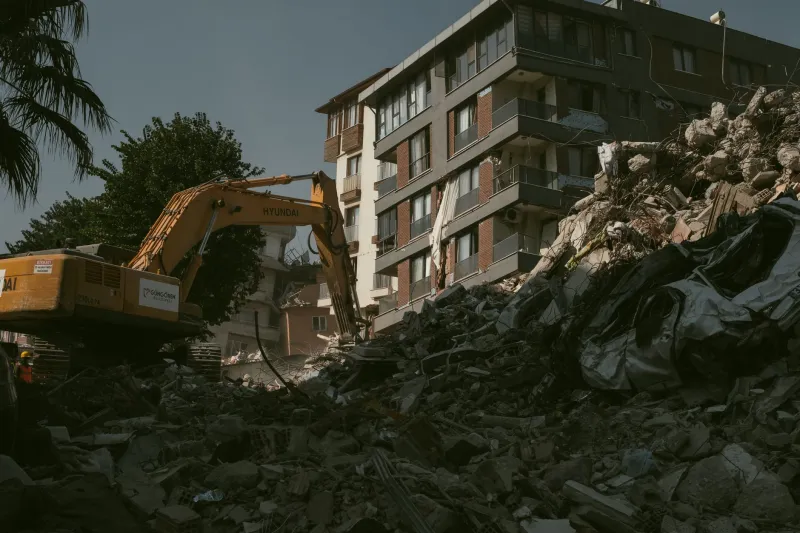
There is a particular moment in nearly every modern American blockbuster when the world comes apart. A skyscraper buckles at its knees. A wildfire crowns across a ridge line in a wall of orange fury. A coastal city disappears beneath a surge of gray water. Audiences lean forward. Hearts accelerate. And almost nobody in that theater thinks about the artist who spent six months persuading a computer to understand how concrete fractures under lateral stress.
That artist is a simulation specialist, and their discipline is one of the most technically demanding and least publicly recognized crafts in contemporary visual effects production. At studios across Los Angeles, New York, and beyond, these practitioners occupy a unique intersection between physics, mathematics, and visual storytelling — building the raw material of catastrophe from equations before a single compositor ever touches the work.
The Language of Chaos
Simulation, as a VFX discipline, is not a single skill. It is a constellation of deeply specialized techniques, each governed by its own physical logic. Fluid dynamics handles the behavior of liquids and gases — the way a tsunami wall curls and churns, the way smoke billows from a burning structure, the way a gas explosion blooms outward in a hemisphere of pressure. Rigid body physics governs solid objects: the crack propagation through a reinforced concrete column, the cascade of debris as a facade peels away from a building, the particular bounce and scatter of rubble across pavement.
Soft body and cloth simulations address materials with memory and flexibility. Grain simulations manage sand, ash, and particulate matter. Pyro simulations — among the most computationally expensive tools in the arsenal — reconstruct the volumetric behavior of fire, smoke, and steam with a fidelity that has improved so dramatically over the past decade that practical pyrotechnic references are now sometimes considered insufficient benchmarks.
Each of these systems must not only behave correctly in isolation but interact with one another convincingly. When a building collapses into a river, the rigid body debris must displace the fluid simulation, which must respond with accurate splash dynamics and turbulence, which must in turn interact with the smoke and dust rising from the impact. The choreography of these interlocking systems is where simulation artistry becomes genuinely complex.
The Invisible Benchmark
What separates a simulation that audiences accept from one that pulls them out of the experience is rarely a question of visual spectacle. The most common failure mode in destruction sequences is not that something looks too small or too contained — it is that it looks wrong in a way the viewer cannot immediately articulate but instinctively registers.
Human beings carry an embodied understanding of physical reality accumulated over a lifetime of watching things fall, break, burn, and flood. That understanding operates below the level of conscious analysis. A debris field that scatters too uniformly, a fire that moves without the irregular hunger of real combustion, a wave that lacks the chaotic surface detail of actual hydrology — these errors register as a vague wrongness before the brain has time to identify the specific flaw.
The best simulation artists understand this implicitly. Their reference libraries are not collections of other VFX work. They are archives of real-world footage: controlled demolitions, military ordnance tests, wildfire aerial surveys, storm surge documentation from hurricanes along the Gulf Coast. The goal is never to replicate the reference exactly but to internalize its physical logic deeply enough to extrapolate convincingly into scenarios that have never been filmed.
The Computational Infrastructure of Destruction
The practical requirements of high-fidelity simulation work are staggering. A single complex destruction sequence — a multi-story building collapse with integrated fluid, smoke, and debris elements — can require render farms operating continuously for weeks. The voxel grids that define volumetric simulations like fire and smoke consume memory at a scale that was practically prohibitive a decade ago and remains expensive today despite advances in hardware.
This computational reality shapes the workflow in ways that are not always visible from the outside. Simulation artists rarely work in anything approaching real time. They set parameters, submit a simulation to run overnight or across a weekend, evaluate the results, adjust, and resubmit. The iterative cycle between artistic intent and computational output can span dozens of passes before a sequence reaches the quality threshold required for final production.
The tools that govern this process — Houdini, in particular, has become the dominant platform for professional simulation work in American VFX production — have grown increasingly sophisticated, incorporating machine learning-assisted solvers and GPU acceleration that compress timelines that would once have been measured in weeks into something closer to days. But the fundamental craft of understanding what parameters to adjust, and why, remains irreducibly human.
Procedural Thinking as Creative Practice
One of the defining characteristics of simulation artistry is that it is, at its core, a procedural discipline. Rather than hand-crafting the position of every piece of debris or painting every tendril of smoke, simulation artists design systems — sets of rules and physical parameters — that generate behavior autonomously. The artist's role is to shape the conditions under which chaos unfolds, not to choreograph chaos directly.
This represents a fundamentally different creative relationship with the work than most other VFX disciplines. A compositor exercises direct control over every pixel. A simulation artist exercises indirect control over emergent behavior, and the gap between intention and outcome is always negotiated through physics. The discipline rewards artists who think in systems, who can anticipate how a change in viscosity parameters will propagate through a fluid simulation, or how adjusting the voronoi fracture pattern on a concrete element will alter the character of a collapse.
It also requires a particular tolerance for productive surprise. The most compelling moments in simulation work are often ones that the artist did not fully anticipate — a debris fragment that catches and tumbles in a way that feels precisely right, a fire column that develops an unexpected lean under simulated wind that makes it read as more alive. Learning to recognize and preserve these emergent moments, rather than correcting them out of the simulation, is itself a practiced skill.
Why the Best Work Disappears
The ultimate measure of a simulation artist's craft is its invisibility. When a destruction sequence works — when the physics feel inevitable, when the scale reads correctly, when the chaos has the textural density of something that actually happened — audiences do not applaud the simulation. They simply believe the world on screen is capable of ending in exactly this way.
That invisibility is not a failure of recognition. It is the definition of success. The simulation artist's job is not to announce the presence of extraordinary technical work but to remove every obstacle between the audience and the emotional experience the sequence is designed to produce. Fear, awe, grief, exhilaration — these are the actual deliverables. The physics are merely the mechanism by which they are made credible.
In an era when audiences have grown sophisticated about the presence of digital effects, the ability to produce destruction that bypasses that sophistication entirely — that lands in the gut before the analytical mind can intercept it — is among the most valuable capabilities a production can possess. The simulation artists who have mastered that capability are, in the most literal sense, building the illusions that make spectacle feel real.