Panel by Panel: The Storyboard Artists Drawing the Future of Hollywood Before a Single Camera Rolls
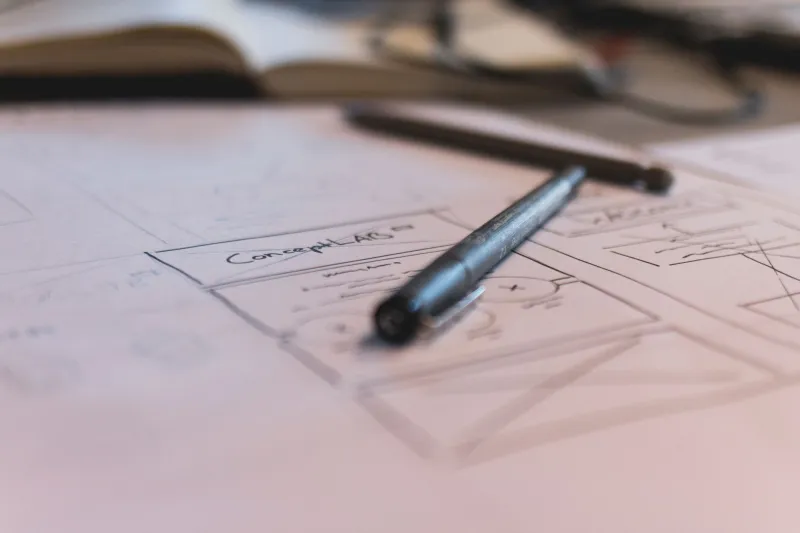
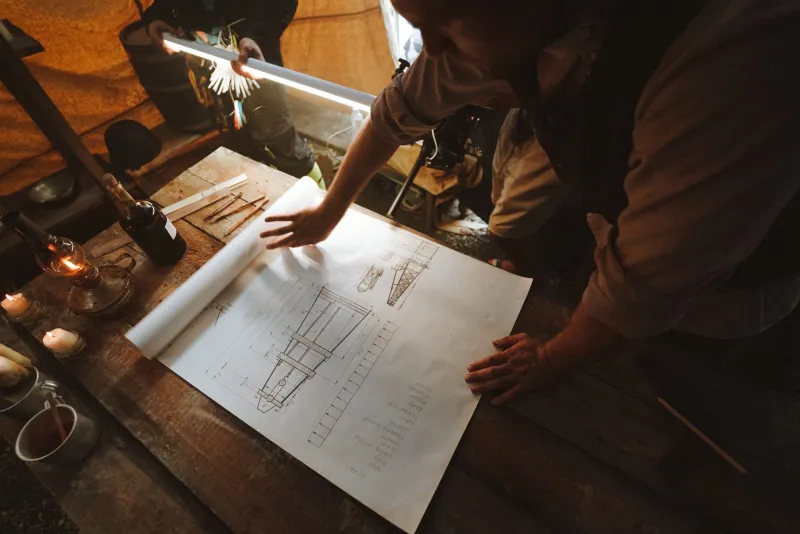
There is a particular kind of silence that precedes a major film production — a period when the script exists, the financing is secured, and the director has a vision that lives, for now, entirely inside their head. It is during this quiet, often underestimated phase that one of cinema's most consequential collaborations takes shape. Storyboard artists sit across from directors, listen carefully, and begin translating instinct into image — panel by panel, sequence by sequence — constructing what amounts to a hand-drawn blueprint for a film that may cost hundreds of millions of dollars to realize.
Their work rarely earns a headline. At awards ceremonies, their contributions are absorbed into the broader categories that celebrate directors and cinematographers. And yet, within the production ecosystems of Hollywood's major studios — from the back lots of Warner Bros. in Burbank to the sprawling facilities of Marvel Studios in Manhattan Beach — storyboard artists occupy a role that is quietly indispensable. They are, in the most precise sense of the phrase, the invisible architects of modern cinema.
The First Visual Language of a Film
A screenplay describes what happens. A storyboard describes how it will be seen. That distinction, deceptively simple on its surface, contains the entire value proposition of the storyboard artist's craft. When a writer notes that a character "races through a collapsing building," they are making a narrative statement. When a storyboard artist renders that same moment — determining the camera angle, the character's position within the frame, the implied motion, the relationship between foreground and background — they are making a series of cinematic decisions that will influence every department that follows.
Directors of photography use storyboards to anticipate lighting challenges. Production designers draw on them to understand which architectural elements must be physically constructed versus digitally extended. VFX supervisors — perhaps the most frequent collaborators in the contemporary blockbuster pipeline — rely on them to scope the complexity of a sequence before a single asset is modeled. In this sense, the storyboard is not merely an artistic document. It is a production instrument, one that carries significant financial implications.
The ability to identify a storytelling problem at the illustration stage, rather than during principal photography or post-production, represents an enormous cost advantage. A revised panel costs an artist a few hours of work. The equivalent revision discovered during a live-action shoot, or worse, during the editing of a VFX-heavy sequence, can translate into scheduling delays and budget overruns that ripple across an entire production.
Collaboration as the Core Discipline
To understand the storyboard artist's role is to understand that their craft is fundamentally relational. Unlike concept artists, who often work with considerable creative autonomy to establish the visual tone of a world, storyboard artists are in constant dialogue. They are, by necessity, skilled listeners and rapid visual interpreters.
The working relationship with a director is perhaps the most nuanced. Some directors arrive with detailed shot lists and specific compositional ideas they need rendered with precision. Others come with emotional intentions — a feeling they want a sequence to produce in an audience — and rely on the storyboard artist to propose the visual grammar that might achieve it. The most effective practitioners of the craft are fluent in both modes, capable of subordinating their own aesthetic preferences in service of a director's sensibility while still contributing genuine creative insight when space is given.
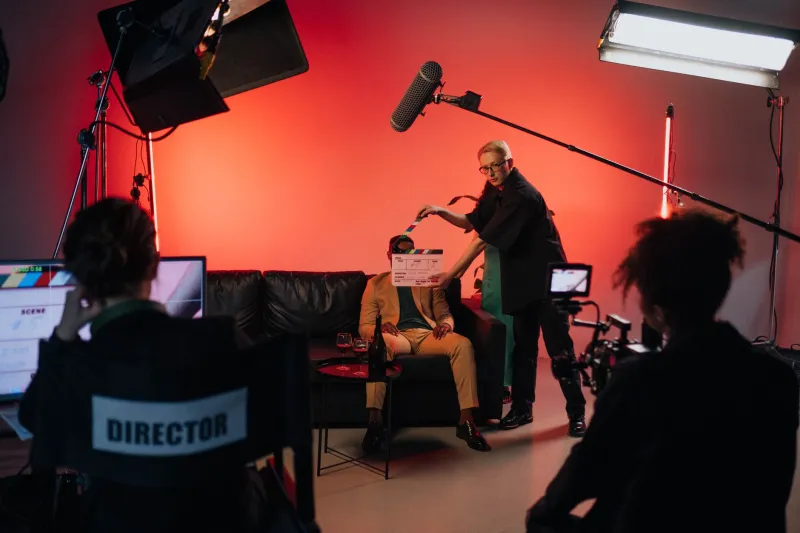
The collaboration extends well beyond the director's chair. In the contemporary production environment, storyboard artists routinely attend meetings with VFX supervisors to ensure that the sequences they are illustrating are technically achievable within the planned pipeline. They work alongside previsualization teams — who translate storyboards into rough three-dimensional animatics — to test whether a sequence holds up when rendered in motion. They consult with stunt coordinators to confirm that action beats are physically plausible. The role, in practice, demands a working literacy in nearly every discipline that touches a film's visual execution.
The Digital Shift and What It Preserved
The tools of the storyboard artist have changed considerably over the past two decades. Digital illustration software, pressure-sensitive drawing tablets, and purpose-built storyboarding applications have replaced, for many practitioners, the ink and paper that defined the craft through most of cinema's history. Speed has increased. Revisions that once required redrawing an entire panel can now be executed in minutes.
And yet, what has not changed — what the digital transition has, if anything, reinforced — is the primacy of drawing as a thinking tool. The act of committing an idea to a visual form, of making a concrete decision about where the camera lives and what it sees, is not a task that can be automated or approximated by a prompt. It requires a mind that understands both the grammar of cinema and the practical realities of production, one that can hold a director's creative intention and a VFX supervisor's technical constraints in simultaneous focus.
Some studios have experimented with AI-assisted visualization tools as supplements to the storyboarding process, generating rough compositional sketches to accelerate early-stage discussions. The consensus among working artists is consistent: these tools are useful for iteration, but they do not replace the interpretive intelligence that a skilled storyboard artist brings to a collaboration. They generate images. They do not generate understanding.
The Sequence That Saves the Film
There is a particular kind of contribution that storyboard artists describe with quiet pride — the sequence that, through the process of illustration, revealed a fundamental problem with how a scene was conceived. A chase that, when drawn out panel by panel, collapsed under the weight of its own geography. An emotional confrontation that, rendered in frames, exposed a pacing issue invisible in the written scene. A climactic set piece whose logistical demands, once visualized, prompted a creative rethinking that ultimately produced a more effective sequence.
These are the moments that define the craft's value — not the faithful reproduction of a director's stated vision, but the active participation in refining that vision before the cost of realization makes revision prohibitive. It is problem-solving dressed as illustration, and it is among the most economically significant forms of creative labor in the Hollywood production pipeline.
Drafting the Invisible
At Illusions of Works, we spend considerable attention on the technologies and techniques that shape what appears on screen — the rendering engines, the LED volumes, the simulation software that turns physics into spectacle. But the frame, in its most essential form, begins not with a processor or a lens, but with a hand moving across a surface, making a decision about what to show and how to show it.
Storyboard artists make that decision thousands of times over the course of a production. They do it quietly, collaboratively, and with a precision that the finished film will never fully reveal. The worlds crafted frame by frame at the level of pixels and light are, more often than not, worlds that were first drafted in ink — by artists whose names you may never know, working in rooms you will never see, solving problems that will never appear in a making-of documentary.
That invisibility is not a failure of recognition. For many who practice the craft, it is the point. The best storyboard is the one that disappears entirely into the film it helped create.