The Volume After the Hype: Virtual Production's Pragmatic Turn
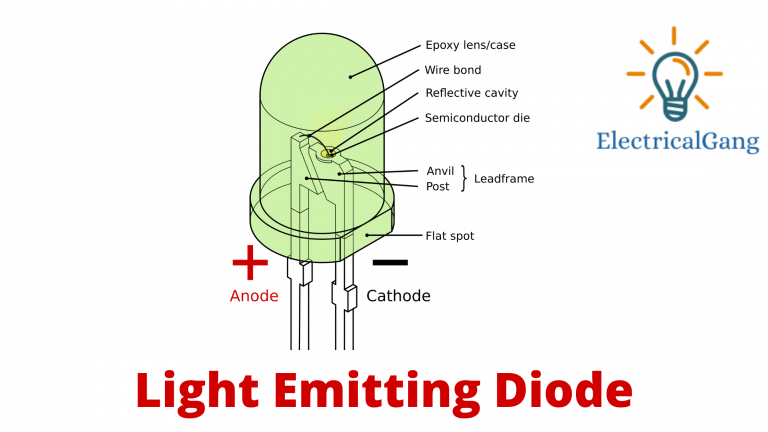
Photo: LED virtual production volume stage with camera crew and large screen, via electricalgang.com
The LED volume was supposed to change everything. For a while, it nearly did. Production designers, cinematographers, and visual effects supervisors were told that the wall of pixels could replace location travel, simplify lighting, and collapse postproduction into the moment of capture. By the early 2020s, the pitch had become a kind of industry shorthand: build the volume, and the old constraints would fall away.
The reality was messier. Some productions discovered that a virtual environment can be as expensive to build as a practical one, and considerably harder to change once the camera starts rolling. Others found that LED walls introduce their own optical problems—moiré, refresh-rate conflicts, limited parallax, and a peculiar flatness when the background must carry more weight than it can bear. The volume did not fail. It simply refused to be a universal answer.
As of 2026, the second wave looks different. It is quieter, more selective, and more useful.
From Cathedral to Tool
The first wave treated the volume as a cathedral: a single, expensive room where entire worlds would be conjured. The second wave treats it as a tool—one instrument among many. US studios are increasingly using LED volumes for what they do well: in-camera background plates, interactive lighting, reflections, and controlled environments that would be difficult or impossible to shoot practically. Episodic television has been especially receptive, because the economics of a recurring series reward repeatable setups and reusable assets. Commercial production has followed, drawn by the promise of a controlled stage and a faster path to a polished frame.
The important shift is philosophical. The question is no longer whether a production can shoot an entire episode inside the volume. The question is which shots genuinely benefit from being captured there.
What the Second Wave Looks Like on Set
On a Los Angeles stage, a second-wave volume often looks less like a science-fiction set and more like a well-instrumented photography stage. A virtual production supervisor sits alongside the gaffer and the colorist. An environment artist may be on set, adjusting a horizon line between takes. The director of photography is not merely lighting actors against a screen; they are lighting actors inside a system that responds to the camera in real time.
In Atlanta, commercial shoots are using the volume for product work where reflections and background continuity matter. In New York, episodic teams are using it for exterior views that would otherwise require a company move. These are not glamorous use cases, and that is precisely the point. The volume is growing up by becoming ordinary.
The staffing model is changing with it. The old boundary between production and postproduction has blurred into a hybrid crew: virtual art department artists, LED technicians, real-time operators, color pipeline specialists, and on-set VFX supervisors who must speak both the language of the stage and the language of the server. For artists, this is both an opportunity and a demand. The ability to collaborate in real time is now as valuable as the ability to polish a shot alone.
The Bid Changes
Virtual production has also changed the shape of a VFX bid. A volume day is not a location day, and it is not a postproduction day. It is a hybrid cost center with its own line items: stage time, LED wall time, real-time content creation, camera tracking, color calibration, and the inevitable iteration that comes when a director sees a world in camera and wants to change it.
Studios that understand the second wave are bidding virtual production as a targeted intervention rather than a blanket solution. They may propose a volume for a handful of hero shots while keeping the rest of the sequence in traditional photography or post. That approach requires more disciplined scoping, not less. It also asks supervisors to explain, in plain terms, what the volume buys and what it does not.
The Artist Between Stage and Server
The artists caught between the stage and the server are the ones most affected by this maturation. A junior compositor may now be asked to understand how a plate was captured, what the wall contributed, and where the seam between practical and digital will be hidden. An environment artist may need to build for real-time playback rather than for a final render. A lighting artist may need to match a practical set that was lit by the volume itself.
This is not a crisis. It is a recalibration. The most valuable artists in this second wave are not necessarily the ones with the deepest specialization, but the ones who can move across disciplines without losing rigor. They understand that the volume is neither a miracle nor a menace. It is a camera-facing tool with specific strengths and specific costs.
The Limits of the Lesson
The second wave has learned from the first, but it has not solved everything. LED volumes still struggle with certain kinds of depth, certain kinds of movement, and certain kinds of direct sunlight. They still require extensive preproduction. They still punish indecision. The productions that succeed are the ones that treat the volume as a production problem to be solved, not a marketing claim to be repeated.
That is the real maturation. The volume is no longer the future of everything. It is a useful part of the present—and for an industry that often confuses novelty with progress, that may be the most valuable lesson of all.