Inside the Skin: The Motion Capture Performers Giving Soul to Hollywood's Digital Giants
Inside the Skin: The Motion Capture Performers Giving Soul to Hollywood's Digital Giants
There is a moment in every motion capture session that technicians quietly refer to as "the crossing" — the precise instant when a performer's physical intention, filtered through hundreds of infrared sensors and interpreted by proprietary software, ceases to be data and becomes character. It is invisible to the naked eye. It rarely makes the press junket reel. And yet, without it, the creatures and heroes that have defined a generation of American blockbuster cinema simply would not exist.
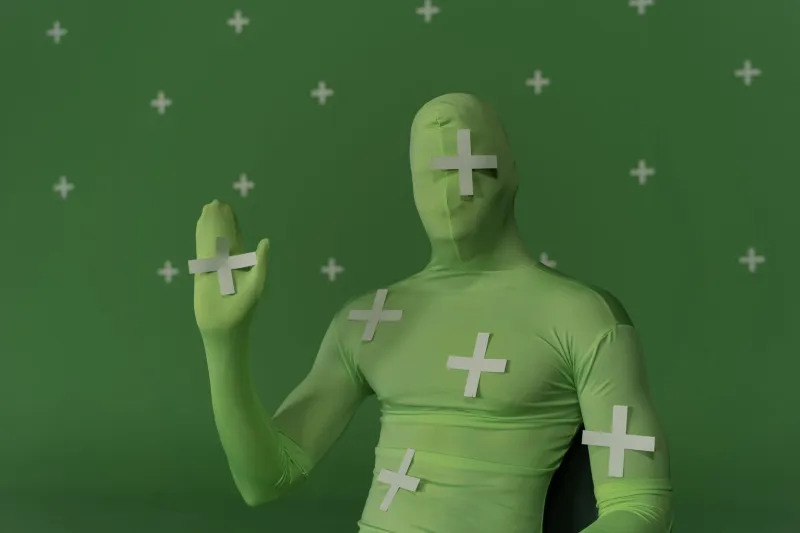
Motion capture performance — the discipline of acting in a form-fitting suit studded with reflective markers while cameras track every micro-movement of the human body — has quietly become one of the most consequential crafts in contemporary entertainment. Studios from Weta FX in Wellington to Industrial Light & Magic in San Francisco have built entire technological ecosystems around translating the human form into digital beings of extraordinary nuance. But the conversation about who powers that translation has lagged dangerously behind the technology itself.
The Architecture of a Performance
To understand what mo-cap actors actually do, it helps to understand what they are not doing. They are not voice acting. They are not providing a reference template for animators to loosely interpret. At the highest levels of the craft, a motion capture performance is a complete physical and emotional act — one that demands the same preparation, vulnerability, and technical precision as any role performed on a traditional set.
Andy Serkis, whose work as Gollum in Peter Jackson's The Lord of the Rings trilogy remains the most widely cited benchmark in the field, spent months developing the physical grammar of a character who moves on all fours, speaks in a fractured internal dialogue, and carries the weight of centuries of psychological deterioration. The performance that audiences saw on screen — the twitching fingers, the hollow eyes, the sudden lurches between tenderness and menace — was Serkis, translated. Every involuntary breath, every weighted pause, every choice about where Gollum's gaze lands in a moment of shame: that is acting, rendered in polygons.
More recently, performers like Terry Notary (Planet of the Apes, Avengers: Infinity War) and Zoe Saldaña (Avatar) have expanded the vocabulary of what is achievable within the capture volume. Notary, in particular, has become something of a movement philosopher within the industry, developing physical archetypes for non-human characters that draw from animal behavior, biomechanics, and emotional psychology in equal measure. His ape performances in the rebooted Planet of the Apes franchise are studies in restrained power — and they exist almost entirely because of choices made before a single frame of digital rendering began.
The Studios Pioneering the Craft
The facilities where this work happens are themselves remarkable environments. Weta FX, the New Zealand-based visual effects house co-founded by Peter Jackson, developed much of the foundational capture technology used across the industry and continues to push the boundaries of facial performance capture — a subset of the discipline that maps the micro-expressions of the human face with millimeter precision. Their work on the Avatar sequels represents perhaps the most ambitious deployment of performance capture technology in film history, with actors submerged in water-filled capture volumes to simulate the aquatic environments of Pandora.
In the United States, studios like Digital Domain and Sony Pictures Imageworks have developed proprietary pipelines that allow captured performance data to be retargeted — meaning a performance recorded on a human body can be mapped onto a character with entirely different proportions, whether that is a fifteen-foot-tall alien or a photorealistic talking animal. The technical sophistication involved is staggering. The human element that makes it meaningful is equally so.
Game development has also become a major frontier for mo-cap performance. Studios like Naughty Dog, whose The Last of Us franchise has set a new standard for character-driven narrative in interactive media, have built their storytelling model around the premise that performance capture and traditional acting are, fundamentally, the same thing. Troy Baker and Ashley Johnson's work in that franchise has been recognized by some critics as among the finest dramatic performances of the past decade — in any medium.
An Industry That Has Not Caught Up
And yet, despite the cultural footprint of these performances, the institutional frameworks of the American entertainment industry have been slow to acknowledge them. The Academy of Motion Picture Arts and Sciences has no category for performance capture acting. SAG-AFTRA, which represents many mo-cap performers, has made incremental progress in securing protections and residuals for its members working in digital performance contexts, but the broader conversation about credit and compensation remains fraught.
The Screen Actors Guild has long required that performers receive on-screen credit for their work. In practice, however, mo-cap actors are frequently listed in ways that obscure the nature of their contribution — buried in ensemble credits, described vaguely as "additional voices," or, in some cases, omitted entirely in favor of the character's name alone. This is not a minor administrative oversight. It is a structural failure to recognize the labor at the heart of some of the most profitable entertainment properties in American history.
The argument against a dedicated mo-cap acting category at major awards shows typically rests on the premise that the performance is too mediated — too filtered through technology — to be evaluated on its own terms. This argument does not survive serious scrutiny. All film performance is mediated. Lighting, editing, sound design, and score all shape how a performance lands with an audience. The camera itself is a mediating technology. To single out motion capture as uniquely impure is to misunderstand both the craft and the history of cinema.
The Humanity Inside the Machine
What is perhaps most striking about the best motion capture performances is how nakedly human they are. Strip away the digital skin, the rendered musculature, the environmental lighting — and what remains is a person in a gray suit, standing in a black room, trying to tell the truth.
Caesar, the chimpanzee protagonist of the Planet of the Apes reboot trilogy, is one of the great screen characters of the past twenty years. His arc — from wide-eyed curiosity to grief to revolutionary resolve — is built on choices that Andy Serkis and later Toby Kebbell made in that room, in that suit, in the presence of other actors and a director and a crew who treated every take with the seriousness the work demanded.
The illusion is extraordinary. But the work behind it is entirely, irreducibly real.
At Illusions of Works, we believe that the most important stories in entertainment are often the ones hidden inside the finished frame — the human decisions and human labor that audiences receive as magic. Motion capture performance is, in many ways, the purest expression of that principle. It is craft disguised as spectacle, humanity dressed in light.
The performers who inhabit these digital bodies deserve to stand in that light themselves.