Ingenuity Over Infrastructure: The Independent Filmmakers Reengineering Visual Effects From the Ground Up
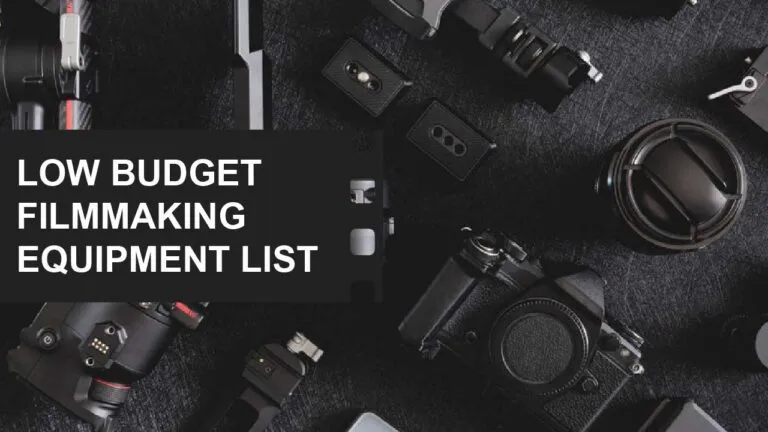
Photo: indie filmmaker DIY filmmaking equipment low budget production setup, via filmdaft.com
The traditional assumption in American filmmaking has been that visual effects exist on a sliding scale of quality that corresponds almost directly to expenditure. More budget means better tools, more talent, and more time—and more of all three produces better results. For most of the industry's history, this was largely true. The infrastructure required for serious VFX work was simply inaccessible below a certain financial threshold.
That assumption is being tested with increasing force. Across independent productions from Los Angeles to Austin to Brooklyn, a generation of filmmakers and effects artists is demonstrating that the relationship between spending and capability is far less linear than it once was. What they are building—through improvisation, technical ingenuity, and a willingness to treat every constraint as a design problem—is not a pale imitation of studio-level work. In a growing number of cases, it is competitive with it.
The Game Engine Revolution
The single most consequential development in independent VFX over the past several years has been the adoption of real-time game engines as production tools. Platforms originally developed to render interactive environments for video games have proven to be extraordinarily versatile foundations for film and television work—capable of generating photorealistic backgrounds, handling complex lighting simulations, and enabling real-time compositing that would have required dedicated render farms a decade ago.
For independent productions, the economics are transformative. A licensed game engine, combined with consumer-grade hardware, can now accomplish tasks that previously required either significant cloud rendering expenditure or access to a studio facility. Filmmakers working at this level describe the experience of building virtual environments in real time as something that has fundamentally changed how they approach production design—not as a limitation to work around, but as a creative tool that opens possibilities that practical production could never afford.
The workflow implications extend beyond background generation. Real-time engines allow independent directors to previsualize complex shots on set, making compositional decisions with immediate visual feedback rather than waiting for post-production renders to evaluate whether an approach is working. The feedback loop collapses from weeks to minutes. For productions without the budget to reshoot, that compression is not merely convenient—it is the difference between a sequence that works and one that doesn't.
Reconfiguring Motion Capture
Motion capture has historically been one of the most capital-intensive tools in the VFX arsenal. Purpose-built optical systems with dedicated infrastructure, calibrated suits, and specialized software pipelines have represented a barrier to entry that effectively excluded independent productions from the technique entirely. The results of this exclusion have been visible in the quality gap between studio-level character animation and what independent work could achieve through keyframe animation alone.
That barrier is eroding. A combination of consumer-grade depth-sensing cameras, inertial measurement unit suits available at a fraction of the cost of optical systems, and machine learning-enhanced processing pipelines has made functional motion capture accessible to productions operating on budgets that would not have covered a single day of rental at a dedicated facility. Independent filmmakers and game developers who have experimented with these configurations report results that, while not equivalent to the highest-end optical systems, are more than sufficient for the demands of narrative filmmaking.
The ingenuity in these workflows lies not in the hardware alone but in the problem-solving that surrounds it. Practitioners working at this level have developed techniques for cleaning and retargeting capture data that compensate for the limitations of consumer sensors—using machine learning tools to fill gaps, correct drift, and smooth artifacts that would otherwise mark the footage as low-budget. The gap between a jerry-rigged indie capture setup and a six-figure studio rig is real. But in skilled hands, it is narrower than the price difference suggests.
Case Studies in Constraint-Driven Creativity
Some of the most instructive examples of this DIY revolution come from productions where the constraint was not merely financial but temporal—where a small team had to deliver complex VFX work on a schedule that precluded conventional approaches entirely.
One recurring pattern involves the use of drone-mounted cameras combined with photogrammetry software to generate detailed 3D environment scans from aerial footage. What would previously have required a dedicated scan team, specialized equipment, and significant post-processing time can now be accomplished by a single operator with a consumer drone and commercially available photogrammetry software. The resulting assets—textured, three-dimensional models of real locations—can be integrated directly into compositing pipelines or used as reference for digital environment construction.
Another pattern involves the repurposing of consumer virtual reality hardware for on-set previsualization. Filmmakers working without dedicated previs departments have found that consumer headsets, combined with real-time engine environments, allow directors and cinematographers to physically walk through digital versions of planned sets or locations before a single practical element has been built. The spatial intuition that develops from this kind of immersive previsualization consistently translates into more efficient shooting days and more confident compositional choices.
What the Establishment Is Watching
The independent VFX community's experimentation with consumer and prosumer tools is not going unnoticed at the studio level. Several large-format productions have quietly incorporated tools and techniques that originated in independent contexts—real-time rendering pipelines, inertial capture systems, and photogrammetry workflows that were developed and refined by practitioners working outside the studio infrastructure.
This flow of innovation from the margins to the mainstream has a long history in American filmmaking, but its current velocity is notable. The democratization of processing power, the proliferation of open-source and low-cost software, and the emergence of a global community of practitioners sharing techniques and solutions online have created conditions in which independent experimentation can produce results that challenge established assumptions faster than the industry's institutional structures can adapt.
For the major VFX studios, this is both a competitive signal and a talent pipeline. The filmmakers and effects artists who are solving complex visual problems with minimal resources are demonstrating exactly the kind of technical creativity and problem-solving orientation that the industry's most ambitious projects require. Several have made the transition to studio work—bringing with them not just skills, but a different relationship to constraint and possibility.
The Principle Beneath the Practice
What unites the independent practitioners reengineering VFX from the ground up is not a shared toolkit or a common workflow. It is a shared orientation toward the problem. They are not trying to replicate studio infrastructure on a smaller budget. They are trying to find the minimum viable path to a specific visual result—and in doing so, they are often discovering that the path is shorter and cheaper than the industry's conventional wisdom suggested.
This is, at its core, what visual effects craftsmanship has always been about: finding the most efficient route from imagination to image. The tools change. The principle does not.