Before the First Brick Falls: How Virtual Scouting Is Rewriting the Language of Production Design
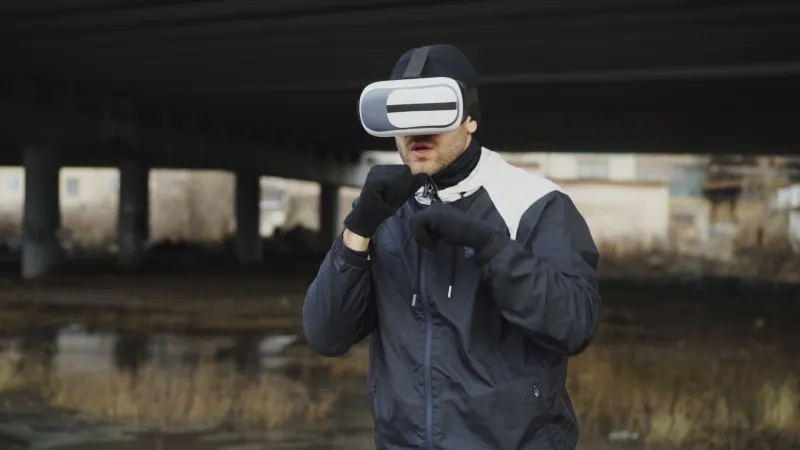
There is a particular kind of silence that precedes the construction of a world. No hammers, no cranes, no location scouts with clipboards navigating unfamiliar streets. Just a headset, a rendering engine, and a production designer standing inside a city that does not yet exist — walking its boulevards, measuring the fall of its light, deciding whether the third-floor cornice of a fictional tenement building reads correctly from a camera mounted at street level.
This is the new front line of American film production, and it is transforming the craft of production design in ways that are as profound as they are largely invisible to the audiences who ultimately inhabit these constructed realities.
The Geography of Imagination, Made Navigable
Virtual scouting — the practice of exploring photorealistic digital environments through VR headsets or real-time rendering platforms — has moved well beyond novelty. What began as a modest extension of previsualization workflows has matured into a full-spectrum design discipline, one in which entire metropolitan environments can be modeled, populated, lit, and revised before a single location agreement is signed or a single permit is filed.
The tools driving this shift are no longer bespoke or prohibitively expensive. Platforms built on game engines such as Unreal Engine have placed real-time, cinematically faithful environments within reach of mid-budget productions, not merely the tentpole blockbusters that once monopolized the technology. A production designer working on a period drama set in 1940s Chicago can now walk a photogrammetric reconstruction of surviving architecture, overlay digital extensions that restore demolished structures, and present that composite environment to a director in a shared virtual session — regardless of whether the director is in Los Angeles, New York, or London.
The implications for collaboration alone are significant. Geography, long a quiet tax on creative decision-making, is being systematically eliminated from the pre-production equation.
Collapsing the Wall Between Pre-Production and Production
Traditionally, the boundary between pre-production and production has been defined by physical commitment. Decisions made on paper or in concept art carried a certain theoretical quality — they could always be revised, at cost, once the crew arrived on set. Virtual scouting has begun to dissolve that boundary in both directions.
When a director and a director of photography spend three hours navigating a digital version of a location together — discussing lens choices, blocking sight lines, identifying where practical light sources feel credible — they are, in effect, conducting technical scouts that would otherwise require transatlantic flights, hotel logistics, and the scheduling coordination of a dozen department heads. The decisions made inside that virtual environment carry genuine weight. They inform set construction budgets, equipment packages, and shooting schedules with a specificity that traditional pre-production tools rarely achieve.
At the same time, the virtual environment remains malleable in ways that physical locations never can be. A street can be widened by forty feet. A skyline can be stripped of anachronistic signage. The angle of the sun can be dialed to any hour of any season. This capacity for frictionless revision is not merely a convenience — it is a fundamentally different relationship between the designer and the space being designed.
The Economics of the Invisible Scout
Beyond the creative advantages, virtual scouting is demonstrating measurable financial value at a moment when production costs have become a defining concern across the American film and television industry. Location scouting for a major studio production can consume hundreds of thousands of dollars before a camera is ever unpacked. International locations compound those costs considerably. When a production can conduct its primary scouting work virtually — narrowing candidates, validating feasibility, and stress-testing design choices before committing resources — the savings accumulate across every subsequent phase of the project.
More significantly, virtual scouting reduces the risk of costly on-location discoveries: the structural column that blocks a critical angle, the ambient noise source that renders a location unusable for dialogue, the sight line that looked workable in photographs but proves impractical under actual shooting conditions. These are the surprises that inflate budgets and compress schedules. The virtual environment, when built with sufficient fidelity, surfaces them early — when they can be addressed through design rather than improvisation.
Some productions have used virtual scouting to make the case for entirely fabricated environments over real-world locations, demonstrating through the virtual walk-through that a purpose-built set or a digitally extended partial construction will yield superior creative results at comparable or lower cost. This is a conversation that once required substantial imagination on the part of studio executives; it now requires only a headset.
Design Authority in a Shared Virtual Space
Perhaps the most underexamined dimension of this shift is what it does to the nature of creative authority on a production. Production designers have historically operated at a remove from the director's most immediate instincts — translating vision into physical space through a chain of drawings, models, and eventually constructed sets. Virtual scouting compresses that chain dramatically, placing the designer and the director inside the same spatial experience simultaneously.
This proximity changes the conversation. A director who can physically navigate a digital environment — who can crouch behind a virtual counter and confirm that the sightline to the doorway is exactly what they imagined — is a director who engages with design at a different level of specificity. The production designer, in turn, becomes less a translator of vision and more a co-navigator of it. The shared virtual space becomes a genuine creative laboratory rather than a presentation medium.
There are, of course, limitations. The most sophisticated virtual environments remain approximations — they cannot fully replicate the acoustic properties of a space, the texture of a surface under practical light, or the psychological weight of physical scale. Experienced designers are careful to treat virtual scouting as a powerful complement to physical reconnaissance rather than a wholesale replacement for it. The goal is not to eliminate presence from the process, but to make presence more intentional and better informed when it finally occurs.
The Quiet Revolution Continues
What is striking about the adoption of virtual scouting across American production is how little fanfare has accompanied it. Unlike LED volume stages — which have attracted significant press attention and visible industry debate — virtual scouting has spread through the industry largely beneath the threshold of public notice. It does not appear on screen. It leaves no visible signature in the finished film. Its most dramatic effects are the problems that never materialize, the costs that were never incurred, the creative compromises that were never necessary.
This invisibility is, in a sense, the highest compliment the technology can receive. The ambition of production design has always been to construct environments so convincing that audiences never question their existence. Virtual scouting serves that ambition by ensuring that the designers themselves have questioned every dimension of those environments long before the first camera rolls.
At Illusions of Works, we have long held that the most consequential creative decisions in filmmaking are made in the spaces between what audiences see. Virtual scouting is, at its core, the art of making those invisible decisions with unprecedented clarity — crafting worlds, frame by frame, before the world itself has been asked to cooperate.