Invisible Ink: The Multimillion-Dollar VFX Industry Hiding in Plain Sight at Your Local Multiplex
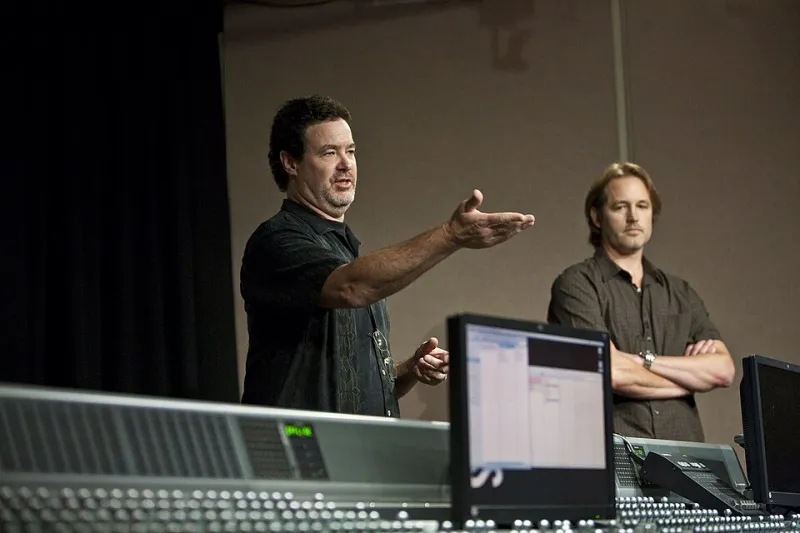
Photo: Vancouver Film School, CC BY 2.0, via Wikimedia Commons
Somewhere between the second cup of coffee and the final credits, a typical studio feature quietly accumulated more than a thousand visual effects shots that no reviewer mentioned, no fan forum dissected, and no award voter noticed. Not the dragon. Not the collapsing bridge. The other kind: the removed safety harness on a period drama, the corrected coffee cup that appeared in a scene shot three months apart, the blue sky painted over three weeks of Atlanta rain.
This is the stealth wing of the visual effects industry, and by its own accounting, it may be the most successful branch of the craft. Its work appears in virtually every American release, from indie dramas to tentpoles, and its defining metric is simple: if anyone noticed, somebody failed.
The Economics of Being Unseen
Stealth VFX, sometimes called cleanup or invisible effects, operates on a fundamentally different contract with the audience than spectacle work. A superhero punch is supposed to be appreciated. A de-wrinkled forehead, a swapped license plate, a crowd extended by forty digital extras — these are repairs, and repairs only make news when they go wrong.
The result is a strange professional culture. Artists in this corner of the industry describe their work in the language of surgery: precise, unsung, judged by the absence of complications. A compositor might spend two days erasing a rigging line from a helicopter shot that audiences will watch for four seconds. The shot succeeds when the four seconds pass without incident.
Studios have learned to budget for this invisibility. Continuity fixes, environment extensions, and seasonal corrections are baked into postproduction as a matter of course, the digital equivalent of touch-up paint. What the public rarely learns is the sheer volume: industry veterans estimate that a majority of VFX shots in a live-action feature are of the unnoticeable variety, not the showpieces.
Why the Credits Stay Buried
There is a deliberate opacity here, and it is not accidental. Studios have long understood that admitting a film is 'full of CGI' can color perception before a single frame is seen. Marketing materials for prestige projects — the kinds that campaign for Oscars — tend to emphasize practical locations, real stunts, and natural light. The two hundred cleanup shots that made the practical footage usable are rarely part of the pitch.
This creates a feedback loop. Audiences believe they are watching mostly practical filmmaking, so they cite those films as proof that digital tools are unnecessary, which gives studios further incentive to downplay the digital scaffolding. The craft disappears into its own success.
The credits themselves compound the problem. Invisible-effects work is often lumped under generic studio names or outsourced vendor listings that read like a phone directory. The artists who spent months ensuring a drama's windows showed the correct weather have no equivalent of the creature designer's press tour.
The Psychology of the Perfect Erasure
What makes this work so difficult is precisely what makes it unglamorous. Removing an object from a plate requires reconstructing what the camera would have seen behind it — a small act of digital archaeology performed hundreds of times per film. Human vision is extraordinarily sensitive to wrongness in familiar environments; a slightly soft patch of sidewalk or an inconsistent shadow reads as falseness even when viewers cannot articulate why.
The best practitioners describe a kind of disciplined restraint. The temptation is always to polish, to make the patch better than the surrounding footage. The job demands the opposite: matching the flaws. A digital sky must carry the same grain, the same lens breathing, the same subtle sensor noise as the original. Perfection, in this discipline, is a bug.
The Achievement Nobody Applauds
There is an argument, increasingly common among supervisors, that invisible effects represent the industry's genuine summit. Spectacle can be forgiven its flaws because audiences want to believe. A continuity fix enjoys no such goodwill — it must simply be correct, frame after frame, without a single viewer ever thinking about it.
Perhaps the honest tribute is this: the next time a trailer boasts that a film was shot entirely on location, in real weather, with no digital assistance, consider the odds that a small army of artists spent their year making that claim almost true. Their reward is a peculiar one. Nobody heard a thing.